
Views: 0 Author: Site Editor Publish Time: 2026-05-06 Origin: Site


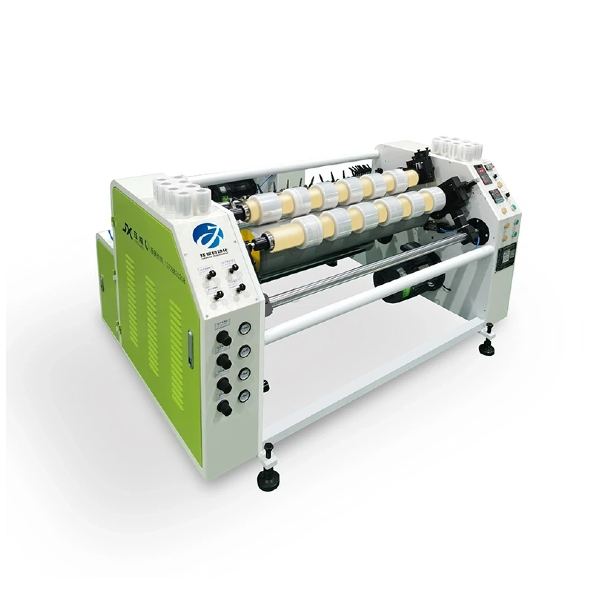
Efficient film converting is essential for modern manufacturing and packaging operations, and understanding the stretch film rewinder and slitter work is critical to achieving consistent quality, reducing material waste, and improving productivity. Guangdong Juexuan Automation Equipment Co., Ltd. designs intelligent machines that transform large rolls of film into uniform, precise smaller rolls suitable for industries ranging from food packaging and logistics to electronics and industrial bundling. These machines combine automated tension control, adjustable slitting blades, high-speed rewinding, and real-time monitoring to ensure reliable, high-quality output while minimizing downtime. This guide provides a comprehensive overview of operational principles, technical details, industry applications, and optimization strategies for these advanced machines.
Stretch film rewinders and slitters operate through a precise unwinding → slitting → rewinding workflow. This sequence ensures that each roll maintains uniform width, consistent tension, and smooth surface quality.
The process begins by loading the jumbo roll onto the unwinding section. Selecting the correct core diameter is critical for maintaining tension and preventing slippage. The machine’s unwinding motor and roller system regulate feed rate and tension to avoid stretching, sagging, or wrinkles.
Automated tension sensors continuously measure film resistance, adjusting motor speed in real-time to accommodate varying roll diameters and material types. This is especially important for thin PE films or specialty films where slight variations can result in roll defects.
Operators also monitor alignment guides and feed rollers to prevent misfeeding, ensuring the film enters the slitting section smoothly. Correct unwinding reduces material waste and prepares the film for precise cutting.
Once unwound, the film is guided through the slitting section. Blades, whether razor or circular, are configured to produce the desired roll widths. Advanced models feature motorized, PLC-controlled blade adjustments for high precision.
Synchronization between blade movement and rewinding ensures uniform cuts and prevents stretching or deformation. Misaligned blades or incorrect spacing can result in uneven rolls, frayed edges, or wasted material.
High-speed slitting requires careful monitoring. Juexuan Automation machines provide automated feedback on blade wear and alignment, allowing operators to make adjustments without stopping production. This ensures consistent roll quality even under high-volume operations.
After slitting, the film is wound onto output shafts. Winding speed, torque, and tension must be carefully balanced. Too high tension can tear the film; too low tension results in loose or uneven rolls.
Automated tension control, combined with synchronized multi-shaft winding, ensures that rolls are tightly wound with uniform density. Features such as automatic core replacement and real-time roll diameter monitoring allow continuous operation without manual intervention.
Advanced models also allow for simultaneous multi-roll rewinding, producing several rolls of varying widths from a single jumbo roll. This reduces downtime, increases efficiency, and supports flexible production schedules.
Tension is the backbone of quality in film conversion. Stable tension prevents stretching, wrinkling, or misalignment during both slitting and rewinding. For thin or sensitive films, improper tension can cause tearing or surface defects.
Dynamic tension control systems adjust in real-time based on roll diameter, film thickness, and feed speed. This ensures uniform roll density, prevents surface imperfections, and maintains precise width throughout the production run.
Different materials require tailored tension settings. PE films for food packaging require delicate tension management to maintain hygiene standards. Thick industrial films, on the other hand, may need higher winding torque to ensure compact rolls.
Automated tension control allows the same machine to handle diverse materials without manual recalibration, supporting mixed-production environments.
Consistent tension directly affects downstream processes such as pallet wrapping, retail packaging, and industrial bundling. Uniform rolls feed smoothly into automated systems, reducing jams, increasing throughput, and improving operational reliability.
The slitting section uses precision blades to cut films into narrower rolls. Razor blades are ideal for thin films requiring fine, clean edges, while circular blades are suitable for thicker films and high-speed production.
Blade sharpness and alignment are critical. Dull or misaligned blades increase friction, create uneven edges, and can damage the film. Regular inspection and replacement of blades maintain output quality and prevent downtime.
Slit width determines the size of finished rolls. PLC-controlled machines allow operators to set blade spacing precisely, enabling multiple roll sizes from a single jumbo roll.
Multi-shaft machines further enhance efficiency by simultaneously producing rolls of varying widths. Proper slit width ensures uniform tension across all rolls, prevents loose winding, and improves downstream packaging compatibility.
High-speed operations require coordination between blade rotation, film feed, and rewinding tension. Juexuan Automation machines feature automated feedback to maintain synchronization, ensuring consistent quality at production speeds of hundreds of meters per minute.
Stage | Description | Operator Focus |
Unwinding | Load jumbo roll | Core selection, tension setup, smooth feed |
Slitting | Cutting film | Blade calibration, alignment, speed synchronization |
Rewinding | Create smaller rolls | Tension maintenance, winding speed, roll tightness |
Output | Finished rolls | Quality inspection, edge smoothness, uniformity |
This table provides a quick reference for operators, highlighting the key actions required at each stage to ensure optimal performance and roll quality.
Advanced machines allow simultaneous rewinding of multiple rolls. Multi-shaft setups reduce manual handling, increase output, and allow production of different roll widths in a single operation.
Automated tension control, synchronized slitting, and precise rewinding allow seamless integration with downstream pallet wrapping, retail packaging, or industrial bundling systems.
Juexuan Automation machines handle various films including PE, plastic, and specialty coatings. Tension and blade settings can be adjusted for different thicknesses, ensuring consistent quality across diverse materials.
Operators should inspect rolls, clean blades, lubricate moving parts, and check alignment systems. Intelligent feedback in advanced models detects anomalies, minimizing downtime and reducing material waste.
· Schedule routine blade sharpening to maintain cutting precision.
· Use automated tension calibration for mixed-material production.
· Monitor roll density and diameter during operation to avoid inconsistencies.
· Implement multi-shaft rewinding for high-volume, multi-width output.
Uniform PE rolls prevent tearing, wrinkling, and contamination. Automated tension and precise slitting improve efficiency in high-volume food packaging lines.
Mini roll slitting supports consistent point-of-sale packaging. Uniform rolls enhance operational efficiency and product presentation.
Bunding films are slit and rewound to precise widths, securing products during storage and transportation while minimizing material waste.
Precision slitting protects delicate components. Uniform rolls maintain consistent tension, reducing the risk of scratches, misalignment, or damage.
Pre-slit films improve print quality by providing smooth, uniform surfaces. Reduced error rates and consistent widths enhance production efficiency and output quality.
Automated rewinders and slitters increase throughput, reduce labor, and produce multiple roll sizes for different packaging stations, streamlining warehouse operations.
· Remote Monitoring: Machines equipped with IoT sensors allow real-time tracking of tension, blade wear, and roll quality.
· Energy Efficiency: Motors with variable frequency drives reduce power consumption while maintaining consistent output.
· Predictive Maintenance: AI-driven analytics forecast blade replacement and motor maintenance, minimizing unplanned downtime.
· Automation Expansion: Integration with robotic palletizers and packaging lines for fully automated end-to-end production.
The stretch film rewinder and slitter work is based on precise coordination of unwinding, slitting, and rewinding, enhanced by advanced tension control, blade configuration, and automation. Guangdong Juexuan Automation Equipment Co.,Ltd. provides machines that translate these mechanics into high-quality rolls for a variety of industrial applications. For manufacturers seeking optimized efficiency, reduced waste, and consistent output, contact us today to experience the advantages of an automatic stretch film rewinding machine.
Q1: Why is tension control critical?
A1: Proper tension prevents wrinkles, stretching, and roll misalignment, ensuring high-quality output and consistent roll density.
Q2: What blade types are used?
A2: Razor blades for thin films requiring precise cuts; circular blades for thicker films and high-speed operations.
Q3: Can multiple roll sizes be produced simultaneously?
A3: Yes, multi-shaft machines allow simultaneous production of different widths, improving efficiency and flexibility.
Q4: How should operators maintain the machine?
A4: Regular lubrication, blade cleaning, alignment checks, and monitoring for unusual vibrations ensure optimal performance and long-term reliability.
Q5: How does automation improve throughput?
A5: Features like auto core loading, synchronized slitting, and real-time tension control reduce manual labor, minimize downtime, and maintain consistent roll quality.


