
Views: 0 Author: Site Editor Publish Time: 2026-08-10 Origin: Site


Unplanned downtime and material waste erode production margins fast. When a machine malfunctions, it immediately compromises your packaging integrity. These operational realities hit your bottom line hard, affecting overall plant efficiency. We should not view troubleshooting merely as a reactive repair process. Instead, consider it a critical evaluation of Overall Equipment Effectiveness (OEE). Overlooking minor mechanical hiccups often triggers larger systemic failures across your entire production floor. Operators must address issues before they escalate into major breakdowns. This guide provides evidence-based diagnostics for common rewinding failures. You will discover practical fixes for daily operational challenges. We also outline clear frameworks to assess machinery health continuously. Ultimately, you will learn to determine if recurring issues signal the need for a complete equipment upgrade. Mastering these diagnostics ensures consistent film output and protects your daily profitability metrics.
Tension Control is Primary: Over 60% of rewinding defects (like telescoping or film snapping) stem from improperly calibrated tension systems or worn dancer rolls.
Slitting Precision Matters: Micro-tears during the separation process often mimic material flaws but are usually caused by dull blades or misalignment in the slitting unit.
Preventative Trumps Reactive: Implementing a strict cleaning and lubrication schedule reduces sudden mechanical seizures by ensuring smooth core transitions.
Repair vs. Replace: Chronic electrical faults or the inability to process thinner, modern gauge films indicate it is time to evaluate a newer film rewinder machine.
Equipment failure directly impacts your core business metrics. Minor alignment issues often compound quickly into massive material waste. This generates scrap film and drives up labor inefficiencies. Operating a faulty machine lowers your OEE drastically. It forces operators to intervene manually, wasting valuable production hours. OEE relies on availability, performance, and quality. A struggling machine diminishes all three factors simultaneously.
Defective rolls create severe downstream failures. Uneven edges or loose cores fail during pallet wrapping. This failure risks significant product damage during transit. Your supply chain relies on stable, secure pallets. Poorly wound film compromises this load containment stability. When end-users receive damaged goods, they hold you accountable. You face financial penalties and damaged brand reputation. The ripple effect of a poor winding process extends far beyond the factory floor.
You must evaluate root causes accurately. Is it operator error, poor material quality, or systemic mechanical failure? We must distinguish between these variables. Treating mere symptoms never resolves the underlying problem. A systematic diagnostic approach saves time and money. Diagnostic precision prevents maintenance teams from replacing perfectly good parts.
Common Mistakes to Avoid:
Blaming raw material quality before checking tension sensors.
Ignoring minor edge defects until they cause web snaps.
Failing to track scrap rates per operator shift.
Resetting error codes without logging them for analysis.
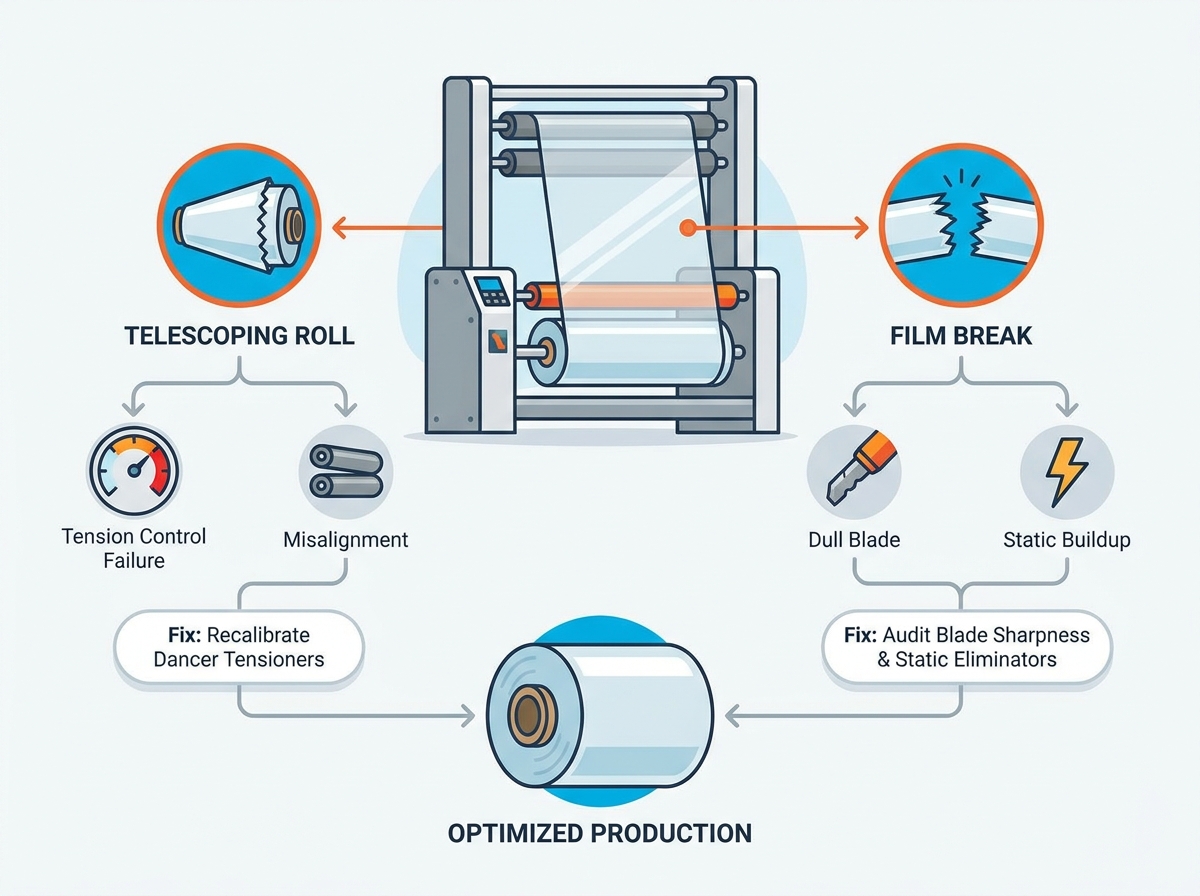
Evaluating your stretch film rewinding machine requires a structured approach. Mechanical and electrical faults often mimic one another. We must isolate components to find true root causes. Fast diagnosis keeps production schedules on track.
Symptom: The finished roll looks like a telescope. It might display staggered, jagged edges across the profile.
Root Cause: Misaligned nip rollers usually cause this issue. Failing tension controllers or uneven floor leveling also contribute significantly. High-speed vibrations shift components out of proper alignment. Air can also get trapped between film layers. This trapped air acts like a lubricant, causing layers to slide laterally.
Actionable Fix: Recalibrate your dancer tensioners immediately. Verify all web alignment sensors function correctly. Level the machine base using industrial spirit levels. Secure all anchor bolts firmly into the concrete floor. Adjust lay-on roller pressure to squeeze out trapped air effectively.
Symptom: You experience inconsistent machine speeds. Sudden machine stalls or cryptic PLC error codes appear randomly.
Root Cause: Servo motors may overheat from continuous heavy loads. Frequency inverter parameters often contain outdated configurations. Sensor cables degrade over time due to constant mechanical vibration. Dirty encoders send erratic speed signals to the PLC.
Actionable Fix: Check torque load settings on every drive motor. Clear ventilation paths for all frequency inverters. Dust accumulation traps heat and destroys electronics. Inspect internal wiring for fraying or loose terminal connections. Clean encoder lenses to restore precise speed feedback loops. Whether you operate a heavy-duty industrial unit or a lighter cling film rewinder, consistent electrical diagnostics prevent catastrophic drive failure.
The following diagnostic matrix helps maintenance teams isolate issues quickly.
Observed Symptom | Probable Component Failure | Initial Diagnostic Step |
|---|---|---|
Erratic Web Speed | Motor Encoder / Frequency Inverter | Inspect encoder cleanliness and check inverter cooling fans. |
Severe Telescoping | Dancer Tensioner / Lay-on Roller | Verify nip roller alignment using a laser tool. |
Constant PLC Errors | Sensor Cabling / Overheating | Check terminal blocks for loose connections or fraying. |
Different film gauges present unique operational challenges. Understanding material behaviors helps operators adjust machine parameters accurately. Environmental factors also play a massive role in film processing.
Symptom: Film snaps repeatedly during the high-speed rewinding phase. Production grinds to a sudden halt.
Root Cause: Excessive winding tension puts extreme stress on the web. Improper pre-stretch ratios create weak points in the film. Static buildup causes the film to stick and snap abruptly. Dry factory environments exacerbate this static issue.
Actionable Fix: Adjust taper tension settings carefully. Taper tension reduces winding force as the roll diameter increases. Ensure static eliminators function properly across the entire web span. Clean ionizer bars to maximize static discharge efficiency. Verify the raw material matches your specified tensile strength.
Operations using a stretch film slitter rewinder machine or a dedicated stretch film slitting machine face unique mechanical challenges. Precision cutting demands perfect blade conditions.
Problem: You notice burred edges on finished rolls. Immediate tearing occurs right after the initial cutting stage.
Actionable Fix: Audit blade sharpness constantly. Check cutting angles for precise geometric alignment. Standardize blade replacement cycles based strictly on running meters. Do not rely on elapsed calendar time alone. Implement a dual-blade system check. Inspect both the top slitter and bottom anvil rollers simultaneously. Uneven wear between them causes ragged edges instantly.
Routine maintenance shifts operations from a reactive to a predictive model. Your stretch rewinder machine requires dedicated, scheduled care to maintain peak performance. Consistency extends equipment lifespan dramatically.
Routine Inspection Cycles:
Establishing a baseline schedule prevents unexpected mechanical seizures. You must enforce these checks rigorously.
Daily Checks: Perform visual inspections of tensioners and rubber nip rollers. Look for flat spots or debris buildup on the surfaces.
Weekly Cleanings: Wipe down web alignment sensors to remove microscopic dust. Inspect all air supply lines for sudden pressure drops.
Monthly Lubrication: Grease heavy drive chains thoroughly. Inspect main shaft bearings for abnormal heat generation during operation.
Annual Overhauls: Update PLC software firmware. Perform full alignment checks on the main structural frame.
Wear Parts Management:
Wear parts dictate your equipment's uptime availability. Maintain an inventory of critical consumables onsite always. Stock slitting blades, rubber nip rollers, and friction rings. Having these items on hand minimizes Mean Time to Repair (MTTR). Waiting for replacement parts stalls production entirely. Store rubber rollers away from direct UV light to prevent premature cracking.
Operator Training:
Even the most advanced machinery relies on skilled operators. They serve as your first line of defense against breakdowns. Operators must recognize early auditory cues of mechanical strain. A grinding bearing sounds entirely different from normal operation. Visual signs of web wandering should prompt immediate intervention. Continuous training programs elevate your overall workforce competency. Empower them to stop the machine before catastrophic failures occur.
Sometimes repairs no longer make financial sense. You must evaluate the long-term viability of aging equipment objectively.
The Financial Decision Framework:
We provide a skeptical, evidence-based checklist for evaluating replacement. Track all maintenance expenses rigorously over a twelve-month period. If annual maintenance costs exceed 30% of the machine’s residual value, replace it. Replacement proves financially prudent under these specific conditions. Constant repairs drain capital and cripple production schedules. Add up lost production time to reveal true operational losses.
Technological Obsolescence:
Legacy systems often struggle with modern material demands. They lack the precision to handle eco-friendly, ultra-thin gauge nano-layer films. Older units also lack automated core-loading features. Manual core loading slows down cycle times severely. Energy efficiency remains another hurdle. Older motors consume significantly more electricity. Newer servo motors use less power, lowering your monthly utility bills. These missing capabilities render older machines uncompetitive.
Modern Alternatives:
Modern engineering offers advanced solution categories. Upgrading to a coreless stretch film rewinder eliminates cardboard core costs entirely. It helps facilities meet strict sustainability mandates quickly. You also save substantial warehousing space previously occupied by empty cores. Automated roll changing reduces operator fatigue and improves safety.
Shortlisting Next Steps:
Evaluate new equipment vendors systematically. Advise buyers to request trial runs using their own specific film gauges. Demand transparent output data during these vendor trials. Assess meters per minute and precise scrap rates accurately. This hard data informs your film rewinder machine acquisition strategy. Never base purchasing decisions on marketing brochures alone. Real-world testing guarantees future performance.
Systematic troubleshooting resolves immediate production bottlenecks efficiently. It gets your lines running quickly. However, tracking the frequency of these issues remains crucial. This ongoing data collection informs long-term capital expenditure decisions.
We advise maintenance managers to document all fault codes meticulously. Track material wastes to build a solid business case. This empirical evidence justifies either a major overhaul or a comprehensive equipment upgrade. Do not let outdated machinery bottleneck your growth.
Consult with an engineering specialist today. Request a thorough equipment audit from a qualified technician. Assess your current stretch film rewinder capabilities objectively. Proactive evaluation ensures higher profitability and perfectly reliable packaging output.
A: Film snapping typically stems from tension mismatch or micro-tears. Excessive winding tension stresses the film web beyond its elastic limit. Dull blades introduce micro-tears that propagate under tension. Recalibrating taper tension settings and replacing worn slitting blades usually resolves this snapping issue immediately.
A: Blade replacement depends entirely on running meters rather than elapsed time. Thicker films and higher production volumes accelerate wear. Implement a standardized wear schedule based on your specific output data. Regular visual audits of edge quality will indicate exactly when blades require changing.
A: Most legacy machines cannot process coreless rolls natively. They lack the specialized coreless mandrels required for this format. You usually need an advanced, dedicated coreless system to achieve proper web transition and roll stability without traditional cardboard cores.
A: High-speed friction between the plastic web and the machine rollers generates static. Dry environments amplify this effect. This friction dynamic causes the cling film rewinding machine to accumulate charge quickly. Functional anti-static bars and properly maintained ionizers are strictly necessary to dissipate this static energy safely.


