
Views: 0 Author: Site Editor Publish Time: 2026-02-27 Origin: Site


Choosing the right slitting technology for stretch film production affects more than just your equipment budget. It shapes your material costs, labor requirements, storage capacity, and environmental footprint. While traditional core-based systems have dominated the industry for decades, coreless slitting technology is gaining ground fast.
If you're evaluating equipment upgrades or planning a new production line, understanding the practical differences between these approaches will help you make a choice that aligns with your operational goals.
Traditional core slitters wind stretch film around cardboard or plastic tubes, typically 3 inches (76mm) or 2 inches (50mm) in diameter. These cores provide structural support during winding and unwinding, but they add weight, cost, and handling complexity to every roll produced.
Coreless slitters eliminate the tube entirely. Advanced tension control systems and specialized winding mechanisms create stable, self-supporting rolls without any central support structure. The result is a finished product that's lighter, more compact, and ready to use without removing a core.
Every cardboard core represents money that doesn't contribute to your final product. A single 3-inch core might cost only a few cents, but multiply that across thousands of rolls per month, and the expenses become substantial.
Coreless technology eliminates this recurring cost entirely. You're not purchasing cores, storing them, or managing core inventory. For high-volume operations producing multiple tons of stretch film daily, these savings can reach tens of thousands of dollars annually.
The environmental benefit is equally significant. Paper core manufacturing requires wood pulp, energy, and water. By removing cores from your production process, you reduce waste and align with sustainability initiatives that matter to environmentally conscious customers.
Space costs money. Whether you're storing finished goods in your warehouse or shipping pallets to customers, every cubic inch matters.
Traditional cored rolls contain a hollow center that serves no functional purpose during storage or transport. That empty space takes up room on pallets, in trucks, and in customer facilities. Coreless rolls eliminate this wasted volume, allowing you to fit approximately 20-30% more product in the same space.
The weight difference matters too. Removing cores from a standard pallet load can reduce shipping weight by several kilograms, lowering freight costs and carbon emissions per delivery.
Production efficiency extends beyond raw speed. It includes changeover times, operator workload, and equipment reliability.
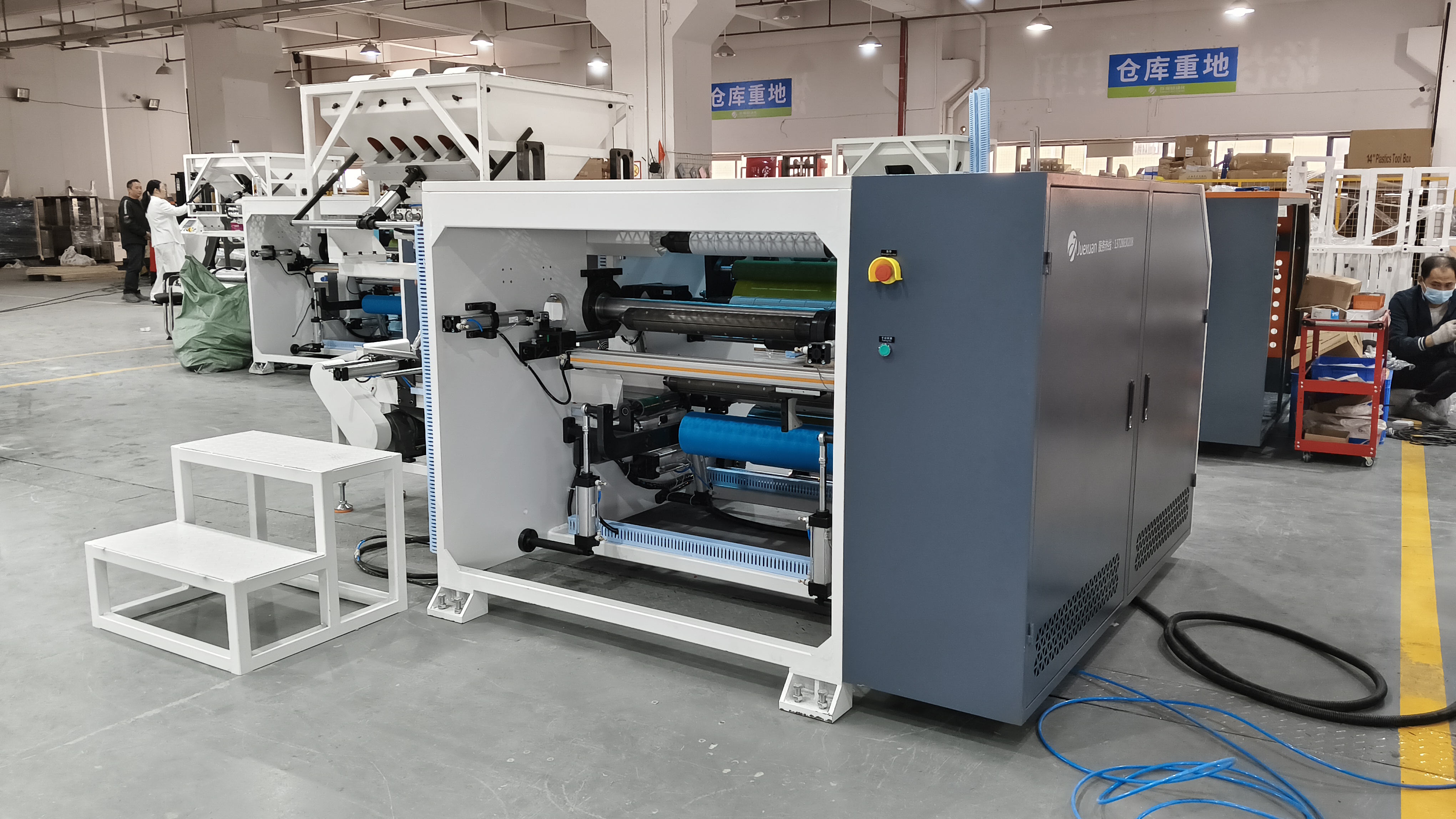
Fully automatic stretch film coreless slitting machines from manufacturers like Juexuan Automation streamline the entire production workflow. These systems automatically load film, adjust tension, complete winding, and discharge finished rolls without manual intervention. Operators can oversee multiple machines simultaneously, reducing labor costs per unit produced.
Traditional core-based systems require operators to load cores onto shafts, align them properly, and remove finished rolls—tasks that consume time and introduce opportunities for errors. While semi-automatic machines with cores can achieve respectable production rates, they require more hands-on management.
Coreless systems also simplify end-user experience. Workers don't need to remove and dispose of cores before using the film. This small convenience matters in busy warehouses where every second counts during packaging operations.
No technology fits every situation perfectly. Understanding where each approach excels helps you match equipment to your specific requirements.
Coreless slitting works exceptionally well for standard stretch film applications where rolls are used relatively quickly after production. The winding technology creates stable rolls that resist telescoping and maintain tension throughout storage and use.
Traditional core systems may offer advantages in specific scenarios:
Very heavy rolls that require extra structural support
Extended storage periods before use
Applications where cores serve a secondary purpose in dispensing equipment
Facilities with existing core-based infrastructure and established workflows
1
The decision between coreless and traditional core slitting depends on your production volume, customer requirements, and long-term business strategy.
High-volume manufacturers producing multiple tons per day typically see faster returns on coreless technology investments. The combination of material savings, improved space utilization, and reduced labor costs creates compelling economics.
Smaller operations or those serving niche markets with specific core requirements might prefer the flexibility of traditional systems, particularly if they already own functional equipment.
Consider your customer base as well. Some large retailers and logistics companies now specify coreless stretch film in their procurement requirements, recognizing the waste reduction and handling benefits. If your target market is moving in this direction, investing in coreless technology positions you advantageously.
Not all coreless slitters deliver the same results. Advanced systems from established manufacturers incorporate features that directly impact your production efficiency and product quality:
Servo-driven tension control maintains consistent winding across different film thicknesses
Automatic loading systems minimize changeover time between production runs
Multi-shaft designs enable continuous operation while one shaft discharges finished rolls
Real-time monitoring systems track production metrics and alert operators to potential issues
Juexuan Automation's fully automatic stretch film coreless rewinding machines, for example, can achieve real process speeds up to 600-800 meters per minute while maintaining precise tension control. This combination of speed and quality helps maximize throughput without sacrificing finished product integrity.
Switching from traditional core-based production to coreless technology requires thoughtful implementation. Successfully managing this transition involves several key steps.
Start by evaluating your current production volumes, material costs, and labor allocation. Calculate the potential savings from eliminating cores and improving space efficiency. Compare these figures against equipment investment costs to establish realistic payback timelines.
Test the technology before full-scale implementation. Many manufacturers offer demonstrations or trial periods that let you verify performance with your specific film formulations and production requirements.
Train operators thoroughly on the new equipment. While modern coreless slitters are designed for ease of use, operators need time to become comfortable with automated features and troubleshooting procedures.
Communicate changes to your customers. Explaining the benefits of coreless rolls—reduced waste, easier handling, environmental advantages—helps them understand and appreciate the transition.
The packaging industry continues evolving toward greater efficiency and sustainability. Coreless slitting technology represents a meaningful step in this direction, offering tangible benefits in material costs, operational efficiency, and environmental impact.
For many stretch film manufacturers, the question isn't whether to adopt coreless technology, but when. As equipment becomes more sophisticated and customer demand for sustainable packaging grows, early adopters position themselves to capture market share and improve profitability.
If you're ready to explore how coreless slitting could improve your stretch film production, connect with equipment specialists who understand your specific requirements. Juexuan Automation offers comprehensive solutions backed by technical support and industry expertise.


