
Views: 0 Author: Site Editor Publish Time: 2026-03-14 Origin: Site


If you work in the packaging industry, you've likely heard the term "rewinding machine" — but do you know what actually happens inside one? These machines are the unsung heroes of film production, quietly converting massive master rolls into the neat, consumer-ready rolls that end up on warehouse shelves and in homes around the world.
From the fully automatic PVC preservation film rewinding machine used in food packaging to the PE packaging film rewinding machine found in industrial logistics operations, these systems handle more complexity than most people realize. This guide breaks down how they work, what types exist, and why automation has changed everything for manufacturers operating at scale.
A film rewinding machine takes a large roll of film — known as a master roll — and re-rolls it into smaller, more usable rolls. Simple in concept, but the execution involves precise tension control, accurate length measurement, clean edge alignment, and fast cycle times.
A PVC preservation film rewinding machine, for example, needs to handle thin, clingy film without stretching or damaging it. PE packaging film, on the other hand, tends to be thicker and requires different tension settings to produce a tight, stable roll. The machine must account for the unique properties of each material.
Manual rewinding was once the norm. Operators would feed film by hand, monitor tension visually, and cut rolls manually. The result? Inconsistent roll density, frequent errors, and slow throughput. Fully automatic machines changed that entirely.
Whether you're running a fully automatic PVC preservation film rewinding machine or a high-speed PE packaging film rewinding machine, the fundamental process follows a similar sequence.
The process begins with a large master roll being loaded onto the unwind shaft. On fully automatic machines, sensors detect the roll diameter and adjust the unwind tension accordingly. This prevents the film from loosening or snapping during high-speed operation.
The film passes through a series of guide rollers that keep it centered and aligned. An edge-guiding system continuously monitors the film's lateral position and makes micro-adjustments in real time. This is critical — even a slight deviation can cause uneven roll edges, which affects how the finished product handles and stores.
This is where the machine earns its keep. A PLC (Programmable Logic Controller) manages the tension applied to the film throughout the rewinding process. Too much tension and the film stretches, losing its cling properties. Too little and the roll comes out loose and unstable.
For PE packaging film, consistent tension also preserves the film's structural memory — the property that allows it to cling and hold loads securely. This is especially important in stretch wrap applications used in logistics and pallet wrapping.
Once the roll reaches the programmed length or weight, the machine triggers an automated cutting system. Most modern machines use encased blade systems for safety, slicing the film cleanly without fraying the edges. The cut is precise, repeatable, and takes a fraction of a second.
For cored machines, a paper tube is automatically fed onto the winding shaft before the next cycle begins. The finished roll is then discharged — often onto a conveyor belt — without any manual handling. On coreless machines, a special internal forming mechanism creates a stable roll structure without a core, reducing material costs and shipping weight.
The entire cycle can repeat continuously, 24 hours a day, with a single operator overseeing multiple lines.
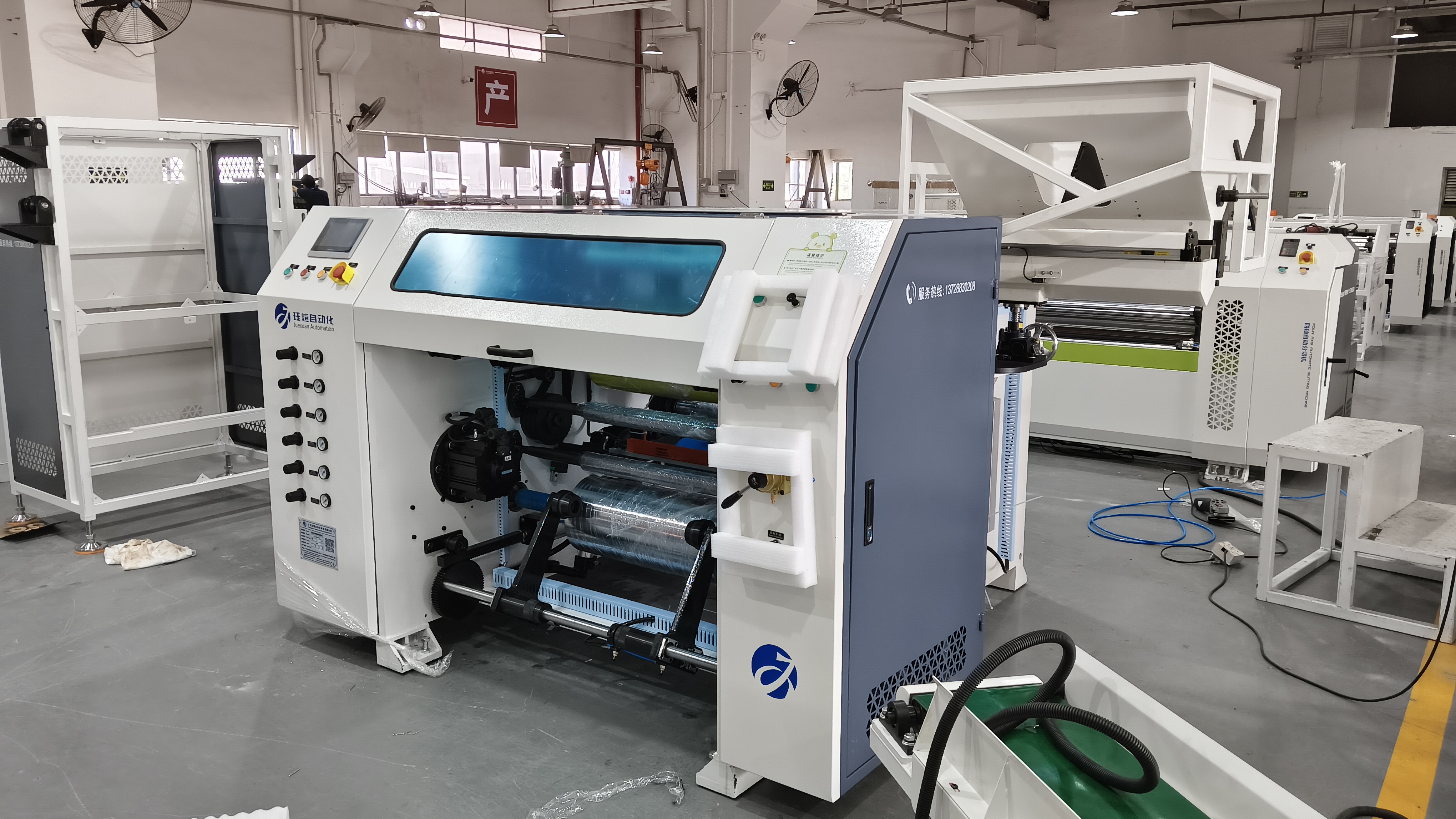
One of the most important decisions in film rewinding is whether to use a cored or coreless system.
Cored rewinding machines wind film onto paper or plastic cores. This is the traditional format, compatible with standard hand-wrap and machine-wrap dispensers. The core provides structural rigidity and makes the roll easy to handle and load onto dispensers.
Coreless rewinding machines eliminate the inner core entirely. The roll holds its shape through the film's own tension and structure. The advantages are real: lower material costs, reduced shipping weight, and less waste. For high-volume producers serving sustainability-conscious customers, coreless technology has become increasingly attractive.
Some manufacturers opt for a hybrid approach — machines capable of switching between cored and coreless production on the same platform. This flexibility allows a single production line to serve a broader range of clients without investing in separate equipment.
Not all film rewinding machines are built the same, partly because PVC and PE films behave very differently.
PVC preservation film is thinner, more elastic, and highly transparent. It's the material used in food wrap — the kind you pull off a roll in a kitchen or a supermarket deli counter. A fully automatic PVC preservation film rewinding machine must handle this material gently, maintaining consistent cling without over-stretching or tearing it during the winding process.
PE (polyethylene) packaging film is generally thicker and more durable. It's used in industrial applications like pallet wrapping and protective packaging. A PE packaging film rewinding machine is typically built for higher throughput and heavier roll weights, with stronger tension systems and more robust frame construction.
Understanding which film type you're working with directly affects the machine specifications you need, including winding speed, tension range, blade type, and roll diameter capacity.
The shift toward fully automatic rewinding machines isn't just about speed — it's about consistency and cost control.
Manual and semi-automatic systems require significant human intervention at every stage: loading cores, monitoring tension, cutting film, and removing finished rolls. Each touchpoint introduces the possibility of human error. Fully automatic systems replace those touchpoints with sensors, PLCs, and motorized handling systems.
The business case is straightforward. A fully automatic PVC preservation film rewinding machine can run around the clock with minimal staffing, producing rolls that meet the same specifications every single time. For manufacturers competing on quality and price, that consistency translates directly into fewer customer complaints, less material waste, and lower labor costs per unit produced.
Safety also improves. Encased cutting systems, emergency stop protocols, and automated discharge mechanisms reduce the risk of operator injury — a significant consideration in any industrial environment.
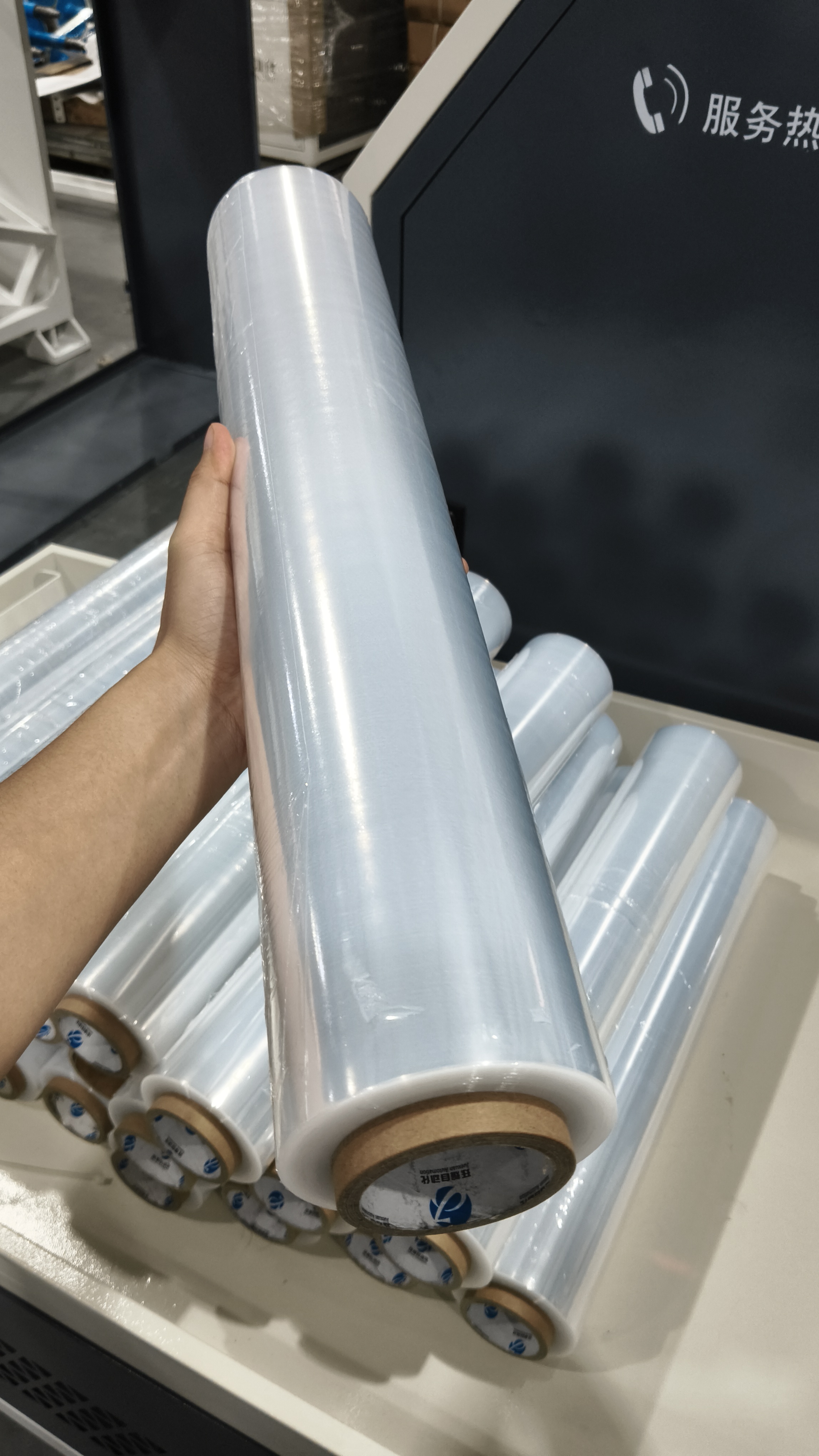
If you're evaluating equipment for your production line, here are the key features worth prioritizing:
PLC-controlled tension management for precise, repeatable results across different film types
Automatic paper tube feeding to eliminate manual core loading between cycles
Edge-guiding systems to ensure clean, aligned roll edges
Hybrid cored/coreless capability if you serve a diverse client base
High-speed winding capacity matched to your daily output targets
Safety enclosures and emergency stop systems for operator protection
24-hour operational reliability with reinforced frames and quality electronic components
1
A film rewinding machine sits at the end of the production chain, but its output is what customers actually see and use. A poorly wound roll — uneven edges, inconsistent tension, loose winding — reflects badly on the manufacturer, regardless of how good the film itself is.
Getting the rewinding process right means investing in the right equipment and understanding the specific demands of your film type, whether that's PVC preservation film, PE packaging film, or another specialty material. Fully automatic machines, when properly specified and maintained, deliver the roll quality and production volume that modern packaging markets demand.
If you're ready to explore the right rewinding solution for your operation, the team at Juexuan Automation offers a full range of fully automatic stretch film rewinding machines — including cored, coreless, and hybrid configurations — built for high-volume industrial use.


