
Views: 0 Author: Site Editor Publish Time: 2026-08-21 Origin: Site


A stretch film can look thin, but a few microns can change how well it holds a pallet. If the film is too light, it may tear. If it is too heavy, you may pay for material you do not need. A stretch film rewinding machine also needs stable film thickness to make clean, usable rolls. In this article, you will learn common micron ranges, gauge conversion, and how to choose the right thickness.
● Stretch film micron thickness usually ranges from very thin light-duty film to heavier film for sharp, unstable, or export loads.
● The best answer to “how many microns is stretch film” depends on load weight, edge risk, wrapping method, and transport distance.
● Thin film can reduce material use, but it needs good resin quality, proper tension, and the right application.
● Thick film gives better puncture resistance, but it may increase cost per pallet.
● Micron gauge comparison helps buyers compare suppliers, but it does not show full performance.
● A stretch film rewinding machine should match the film’s thickness, width, tension behavior, and finished roll target.
● For machine film, stable thickness is critical because poor film control can cause breakage, loose rolls, and uneven rewinding.
A 9–12 micron stretch film is usually used for light, smooth, and stable products. It is thin, clear, and easy to apply when the pallet does not have sharp edges. It can also help reduce material use when the packaging job does not need heavy protection.
This range is not the safest choice for mixed pallets, rough handling, or long transport. Thin film can break when it meets a sharp carton corner or when the operator adds too much tension. If you plan to convert this film through a stretch film rewinding machine, thickness control becomes even more important because thin film reacts quickly to tension changes.
A 13–17 micron film works well for many light-to-medium packaging jobs. It offers better strength than ultra-thin film while keeping material use under control. Many warehouses use this range for boxed goods, regular cartons, and pallets that move through normal storage and delivery routes.
This range is often a good starting point when buyers want both cost control and usable holding force. It can also be suitable for machine film when the wrapper, film rewinder machine, and roll quality are well matched.
The 18–23 micron range is a common choice for standard pallet wrapping. It gives a practical balance between strength, stretch, clarity, and cost. When people ask how many microns is stretch film, this range is often the easiest reference point for general machine and warehouse use.
Machine grade stretch film microns often fall near this range because automatic wrapping needs reliable film behavior. A stretch film rewinding machine can convert parent rolls into hand rolls, machine rolls, or custom-length rolls, but it must keep stable tension to protect film quality.
A 24–30 micron film is used when the load is heavier, taller, less stable, or more likely to face rough handling. It offers stronger puncture resistance and better load containment than thinner films. It is useful for products shipped across longer routes or stored in changing warehouse conditions.
This range can cost more per roll, but it may reduce rewrapping, film breaks, and damaged products. The real question is not only roll price. It is whether the film keeps each pallet secure at the lowest practical cost.
A 31–35 micron film is usually for heavy-duty jobs. It may be used for irregular goods, sharp edges, construction materials, or tall loads that need stronger containment. The extra thickness gives more protection, but it should not be used blindly.
Thicker film is not always better. If the load is smooth and light, a heavy film may waste material. A stretch rewinder machine can process thicker film, but the finished roll still needs the right tension, edge quality, and roll density.
Micron Range | Common Use | Main Benefit | Main Risk |
9–12 microns | Light, smooth loads | Lower material use | Easier to tear |
13–17 microns | Light-to-medium cartons | Balanced cost | Limited edge protection |
18–23 microns | Standard pallet wrapping | Reliable daily use | Needs correct tension |
24–30 microns | Heavier pallets | Better containment | Higher material cost |
31–35 microns | Sharp or irregular loads | Stronger protection | May be over-specified |
Tip:Always test the thinnest film that can safely hold the real pallet, not just a sample box.
Micron is a metric thickness unit. One micron is one-thousandth of a millimeter. Gauge is another way to describe film thickness, often used in some markets. When buyers compare stretch film micron thickness across suppliers, they often need a stretch film gauge to micron reference.
A simple micron gauge comparison helps prevent wrong orders. For example, a buyer may request a stretch gauge while another supplier quotes in microns. Without gauge conversion, the two sides may think they are discussing the same film while the real thickness differs.
The table below is a practical guide. Exact values may vary slightly by supplier and measurement method.
Approx. Micron | Common Thickness Class | Typical Use |
12 microns | Thin film | Light-duty wrapping |
15 microns | Light-to-medium film | Smooth cartons |
20 microns | Standard film | Common machine film |
23 microns | Stronger standard film | Pallet wrapping |
30 microns | Heavy-duty film | Heavy or unstable loads |
Micron thickness helps compare film, but it does not tell the full story. Two films with the same film thickness may perform differently because resin quality, stretch ratio, cling, and puncture resistance are not the same.
Gauge conversion should guide selection, not replace testing. A 20 micron film from one producer may perform better than a thicker film from another if the material is stronger. For users of a stretch film slitter rewinder machine, stable film behavior matters as much as the number printed on the roll label.
Note:Use micron and gauge as a first filter, then test load stability before changing regular purchasing specs.
Light goods usually need thinner film. Medium pallets often need a mid-range film. Heavy loads need stronger film or a higher-performance material. This sounds simple, but many packaging problems happen because one film is used for every load.
If a pallet is light and stable, a thinner film may work well. If the pallet is heavy, tall, or shifts easily, a higher micron film may be safer. The goal is to use enough film, not the most film.
Load shape can matter more than load weight. A smooth pallet of cartons is easier to wrap than a pallet with mixed boxes, protruding corners, or uneven height. Sharp edges can cut into the film, especially when the film is stretched too far.
For irregular goods, buyers should not choose film thickness by price alone. A slightly thicker film can reduce tears during wrapping and movement. If the film will be converted by a stretch film rewinder, the edge quality of the roll also becomes important because damaged edges can cause breaks during use.
Short-distance warehouse movement may not need the same film as export shipping. Pallets that travel far may face vibration, stacking pressure, humidity, and repeated handling. In these cases, a stronger film can offer better safety.
For local storage, thinner film may be enough. For long-distance shipping, a 20–30 micron range may be more practical, depending on the product. The film should hold the load through the full route, not only look good after wrapping.
Many buyers focus on roll price. That can be misleading. A cheaper roll may lead to more film use, more breaks, and more labor. A better film may cost more per roll but reduce cost per secured pallet.
The same rule applies to machine film and rewound rolls. A stretch film rewinding machine should produce rolls that unwind smoothly and keep steady tension. If roll quality is poor, even the right micron film can fail during wrapping.
Tip:Track film breaks, wraps per pallet, and damaged shipments before judging whether a thicker or thinner film is cheaper.
Hand stretch film is used for manual wrapping. Operators need rolls that are easy to hold, easy to unwind, and not too heavy. Because people apply the force by hand, very thick film can increase fatigue, while very thin film can tear if handled roughly.
A practical hand film selection should balance strength and comfort. For light cartons, thinner film may work. For heavier pallets, a stronger film gives better control. The operator’s wrapping method also affects the final result.
Machine film needs more consistent thickness, stretchability, and roll quality. Automatic wrappers apply controlled tension and stretch. This means machine grade stretch film microns must match the wrapper’s pre-stretch system and the load type.
A stretch film rewinding machine can help produce machine rolls from larger parent rolls. It must control winding tension, roll length, and edge alignment. Poor rewinding may cause loose rolls, wrinkles, or sudden film breaks on the packaging line.
Stretch ratio changes how film performs. A film may look thick enough before wrapping, but after stretching, it becomes thinner around the load. If the film is stretched beyond its safe limit, holding force drops and tearing becomes more likely.
This is why micron thickness and stretch ratio should be reviewed together. A machine film that runs well at the correct stretch level can reduce material waste. A film that breaks often creates downtime and extra labor.
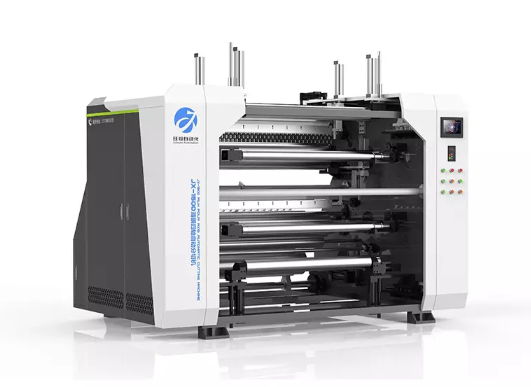
A stretch film rewinding machine turns large rolls into smaller finished rolls. It can produce retail rolls, industrial rolls, cored rolls, or coreless rolls. During this process, film thickness affects tension control and roll shape.
If the film is thin, tension must be gentle and stable. If the film is thicker, the machine still needs smooth control to avoid hard rolls or uneven winding. Good rewinding makes the roll easier to use later.
A stretch film slitting machine thickness setting should match the film’s micron range and material behavior. Thin film needs clean blades, stable web tension, and careful edge control. Thick film may need stronger mechanical stability to avoid rough cuts.
A stretch film slitter rewinder machine combines slitting and rewinding. It must keep the cut edge smooth because small edge damage can become a tear during unwinding. For buyers, slitting quality is not a small detail. It affects the whole packaging process.
A coreless stretch film rewinder removes the need for paper cores and can reduce packaging waste. Coreless stretch film rewinder film thickness still needs careful control because coreless rolls depend heavily on winding density and inner roll stability.
A cling film rewinder or cling film rewinding machine may also require careful thickness control, especially when converting thin flexible film. Cling film rewinding machine micron thickness should be checked against the material type, roll length, and end-use wrapping method.
Note:Roll appearance matters, but unwind behavior matters more during daily packaging work.
Thin stretch film can lower material use and reduce roll weight. It often gives better clarity, which helps workers see labels and product information. It is a good fit for smooth, light, and stable loads.
Thin film can also support cost savings when used on the right pallets. In a good setup, it may reduce waste without reducing load safety. But the film must match the wrapping method.
Thin film is more sensitive to sharp edges, rough handling, and poor tension control. It can tear if the wrapper pulls too hard or if the pallet has rough corners. It may also fail during transport if the load moves too much.
For machine use, thin film needs stable rolls and accurate equipment settings. If a stretch film rewinding machine produces uneven rolls, thin film problems become more visible.
Thick film gives better puncture resistance and stronger load containment. It is more forgiving on irregular pallets. It can help reduce the risk of damage during longer transport.
For heavy goods, a thicker film may be the safer choice. It may also perform better when operators cannot fully control each wrapping condition.
Thick film costs more per meter and uses more plastic. It may also be unnecessary for stable cartons. If a buyer uses heavy film for every product, the packaging cost may rise without real benefit.
The best choice is not thin or thick. It is the film that holds the load safely at the lowest total cost.
A low roll price can hide higher real costs. If the film breaks often, workers need more time to wrap each pallet. If the load shifts, product damage may cost much more than the film itself.
One micron thickness cannot solve every packaging job. Smooth cartons, sharp products, light loads, and export pallets all behave differently. A better packaging plan may include two or three film specs.
Machine film must match the wrapper and the converting equipment. A stretch film rewinding machine, stretch film slitting machine, or stretch rewinder machine should be set for the film width, thickness, roll length, and target roll type.
If the machine settings are wrong, film thickness alone cannot fix the problem. Poor tension, poor cutting, or weak edge control can cause failure even with a good film.
Sample testing should use real pallets, real wrapping speed, and real transport conditions when possible. Check film breaks, load movement, edge tears, and roll unwind quality. Then compare cost per pallet instead of cost per roll.
Stretch film usually ranges from thin light-duty film to heavier 30 micron plus film. The right choice depends on load weight, pallet shape, transport risk, and machine setup. Guangdong Juexuan Automation Equipment Co.,Ltd. provides stretch film rewinding, slitting, and coreless converting solutions that help producers improve roll quality, output, and material control.
A: Common stretch film ranges from about 9 to 35 microns, depending on load weight and protection needs.
A: A stretch film rewinding machine does not change thickness, but it must control tension to protect film quality.
A: Machine film often uses mid-range microns, commonly around 18–23 microns for standard pallet wrapping.
A: It may break due to weak edges, poor tension, damaged rolls, or incorrect stretch film rewinding machine settings.
A: No. Thicker film adds strength, but it can raise cost when the load does not need it.


