
Views: 0 Author: Site Editor Publish Time: 2026-08-29 Origin: Site


A PVC cling film machine can look simple, but its cost can change a lot. A basic rewinder and a fully automatic stretch film rewinding machine do not serve the same production goal. In this article, you will learn what affects the price, what should be included in a quote, and how to judge real value before buying.
● PVC cling film machine cost depends on machine type, output speed, film width, roll size, automation level, and optional functions.
● A basic cling film rewinder usually has a lower price than a stretch film slitter rewinder machine because it has fewer automatic systems.
● A stretch film rewinding machine can cost more at the start, but it may reduce labor, film waste, unstable roll quality, and downtime.
● Buyers should compare machine configuration, not only the quoted price.
● The real budget should include packing, shipping, spare parts, voltage customization, installation support, training, and warranty.
● Coreless rewinding, automatic roll change, automatic cutting, and accurate tension control can raise machine price, but they may improve long-term return.
● The best machine is not always the cheapest one. It is the one that matches your roll size, output plan, labor cost, and market demand.
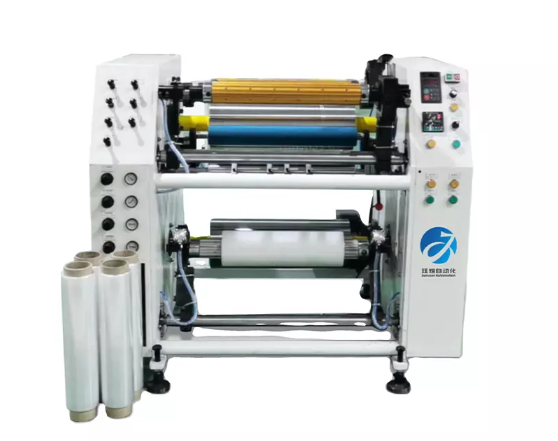
When buyers search for PVC cling film machine cost, they often want a clear number. In real purchasing, the price is rarely fixed. A machine for small roll conversion, a cling film rewinding machine for supermarket rolls, and a stretch film rewinding machine for higher output all have different structures and functions.
The cost also depends on what you want to produce. Some buyers need household cling film rolls. Others need commercial rolls, jumbo roll conversion, or stretch film rolls for packaging. These products may need different film widths, core sizes, roll lengths, cutting methods, and rewinding speeds.
A low-cost film rewinder machine may be enough for a distributor starting with small batches. A factory may need a faster stretch rewinder machine with automatic cutting, slitting, counting, loading, or unloading. These upgrades increase the first investment, but they can also reduce labor and improve roll quality.
The best way to understand PVC cling film machine price is to see it as a full production cost, not only a machine tag. You need to review machine design, output target, operator needs, waste control, spare parts, support, and future expansion.
Note:Ask for a quotation only after you know your film width, roll length, core size, and daily output target.
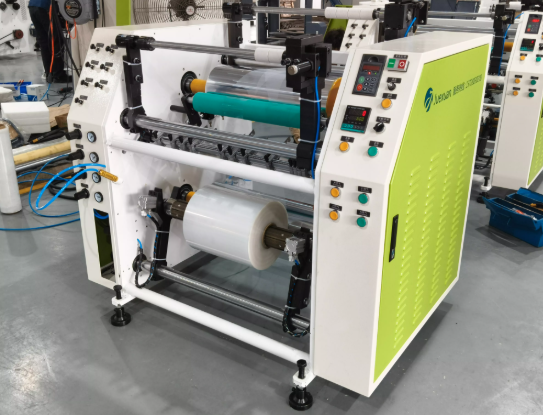
The biggest cost factor is machine type. A simple cling film rewinder mainly rewinds large rolls into smaller finished rolls. It has fewer systems, so the cling film rewinder machine cost is usually lower. A stretch film slitter rewinder machine does more work. It can rewind and slit film in one process, so it needs more accurate control, stronger shafts, and better cutting stability.
Production capacity also affects price. A machine built for higher output needs a stronger frame, better motors, stable transmission, and more reliable electrical control. If the machine runs for long shifts, it must keep roll tension stable. It must also reduce vibration and overheating. These details make a high-capacity stretch film rewinding machine price higher than a basic rewinder.
Film roll width is another key point. A narrow machine for small finished rolls costs less than a machine that handles wider parent rolls. Wider film requires stronger support, better alignment, and more accurate tension control. If the machine can process different film widths, it may need adjustable shafts, guide systems, and stronger slitting parts.
Automation level changes both price and operating cost. Manual or semi-automatic equipment needs more operator work. It is cheaper at first, but it may need more labor. Fully automatic equipment may include automatic film loading, cutting, counting, tube loading, roll change, or unloading. These systems raise the initial stretch film rewinding machine price, yet they help one operator manage more output.
Coreless rewinding also changes cost. A standard stretch film rewinder uses paper or plastic cores. A coreless stretch film rewinder does not rely on a paper core for each roll. It can reduce core material use, but the machine itself is more complex. That is why coreless stretch film rewinder price is often higher than a simple cored rewinder.
Slitting accuracy and tension control are also important. For commercial roll production, buyers care about clean edges, flat rolls, tight winding, and stable length. A stretch film slitting machine cost rises when it needs sharper blades, better shaft balance, servo or frequency control, and more accurate web tension. Poor slitting may cause edge defects, film waste, and customer complaints.
Cost Factor | Lower-Cost Configuration | Higher-Cost Configuration | Why It Matters |
Machine type | Basic rewinder | Rewinding and slitting system | More functions need more control parts |
Capacity | Small batch output | High-speed continuous output | Higher output needs stronger structure |
Film width | Narrow rolls | Wider parent rolls | Wider film needs better tension control |
Automation | Manual or semi-auto | Fully automatic operation | Less labor, higher upfront cost |
Core style | Cored rolls | Coreless rolls | Saves core material but needs complex design |
Slitting quality | Basic cutting | Precision slitting | Better edges and less film waste |
Support | Basic supply | Training, warranty, spare parts | Reduces downtime risk |
Tip:Do not compare two machines only by price. Compare what each one can actually do per shift.
Entry-level PVC cling film rewinder cost is usually the lowest. These machines fit small workshops, new converters, local distributors, or buyers testing a new product line. They often have simple rewinding, basic cutting, and limited automation. They may work well if the roll size is simple and production demand is not high.
Mid-range cling film rewinding machine price is higher because the machine gives better stability. It may handle more film sizes, run faster, and produce neater rolls. Buyers in this range often care about daily output, roll appearance, and lower waste. A mid-range stretch film rewinder cost can be easier to justify when labor is expensive or when customers expect consistent roll quality.
High-capacity machines are designed for serious production. A high-capacity stretch film rewinding machine may include automatic loading, automatic cutting, automatic roll change, slitting, counting, and more stable speed control. Some systems can also support cored or coreless production. This level needs a bigger stretch rewinder machine budget, but it helps factories scale output.
Similar-looking machines may have very different prices. Two machines may both be called film rewinder machine, but one may use better motors, stronger shafts, safer design, and more precise tension control. Another may look similar but lose stability during long production. The difference may not be obvious in photos.
This is why buyers should ask for more than a catalog. Real running videos, sample rolls, film width range, roll diameter range, speed data, and after-sales terms help you understand real value. A low quote may become expensive if the machine wastes film, stops often, or cannot meet your final roll requirements.
Note:If a supplier gives a very low price, ask which functions are excluded before you compare it with another quotation.
A useful quotation should explain what comes with the machine. At minimum, buyers should confirm the machine frame, motor system, control panel, shafts, cutting unit, safety parts, and standard tools. These items affect both price and long-term use.
Optional functions can change the final cost. Automatic cutting, automatic counting, automatic roll change, tube loading, conveyor connection, labeling, weighing, voltage customization, and coreless rewinding may not be included in a basic offer. Each option should match a real production need. Paying for unused functions is not smart, but removing key functions can reduce efficiency.
Packing and shipping also matter. Wooden packing, spare blades, spare shafts, electrical parts, sea freight, customs clearance, taxes, and local delivery may raise the landed cost. The machine price alone does not show the full budget. Buyers should ask whether the quote is based on factory price, shipping included, or delivered cost.
Installation and training should also be reviewed. Some suppliers offer online video support, installation guidance, troubleshooting, and spare parts supply. These services may not look like machine parts, but they affect uptime. For a stretch film rewinding machine, fast support can be valuable when production is urgent.
Warranty terms are part of cost value. A longer and clearer warranty may reduce risk. It also shows how confident the supplier is in the machine. Ask what parts are covered, how spare parts are shipped, and how technical questions are handled.
Tip:A complete quotation should help you calculate the final landed cost, not only the factory machine price.
Start by defining your target product. Are you making household cling film rolls, supermarket food wrap rolls, commercial PVC cling film rolls, or stretch film rolls? The answer affects machine width, roll length, core size, cutting method, and automation level. It also decides whether a basic cling film rewinder or a stretch film rewinding machine fits better.
Next, calculate daily or monthly output demand. If you only need small batches, a simple film rewinder machine may be enough. If you plan to supply distributors or run long shifts, you may need a faster automatic machine. A higher film rewinder machine price may still be reasonable if it lowers unit cost.
You should also match the machine to market roll sizes. Finished roll width, roll length, roll diameter, and core diameter should be clear before inquiry. If your customers need different roll sizes, choose a machine that can adjust easily. This helps avoid buying another machine too soon.
Labor cost is another major part of cling film machine investment. A manual machine may save money at first, but it may need more people. Automatic equipment costs more, yet it can reduce repeated handling. In factories, this difference affects film rewinder machine ROI.
Material waste should also be included. Poor tension control, weak cutting, and unstable rewinding can create loose rolls, wrinkles, uneven edges, and rejected products. Better control systems can reduce waste and improve finished roll value.
Payback period depends on output, labor saving, material saving, and selling price. A cling film machine payback period may be shorter when the machine runs daily and produces rolls with stable quality. It may be longer if the machine is oversized for demand. The goal is not to buy the most advanced system. The goal is to buy the right level of capacity.
The lowest price is not always the lowest cost. A cheap machine may need more repair, create more waste, or fail to meet roll quality needs. If it stops during peak production, downtime can cost more than the price difference.
Compare machine configuration line by line. Check motor power, rewinding speed, slitting width, shaft size, compatible film materials, control system, frame strength, tension control, and safety protection. These details help explain why one stretch film slitter rewinder machine price is higher than another.
Ask for real production videos or sample roll testing. A good test should show roll tightness, edge quality, cutting accuracy, running speed, noise level, and film waste. A photo of the machine cannot prove production stability. A running test gives more useful evidence.
Also review after-sales service. Ask about operator training, spare parts, warranty, online support, and response time. A reliable supplier should help you understand how the machine works after delivery, not only before payment.
For buyers comparing PVC cling film production cost, supplier experience also matters. A supplier focused on rewinding and slitting equipment can usually provide better advice on film width, roll length, shafts, coreless production, and automation choices. This helps reduce wrong investment.
Note:The best supplier helps you avoid overbuying and underbuying at the same time.
PVC cling film machine cost depends on capacity, width, automation, precision, options, and support. Guangdong Juexuan Automation Equipment Co.,Ltd. provides stretch film rewinding, slitting, and coreless solutions for different production needs. Its machines help buyers improve roll quality, reduce labor, and plan a smarter long-term investment.
A: Capacity, film width, automation, slitting accuracy, and support affect cost most.
A: A stretch film rewinding machine costs more when it has automatic cutting or coreless rewinding.
A: A stretch film rewinding machine improves roll quality and reduces manual work.
A: Confirm roll size, output target, spare parts, and warranty before buying.
A: It can save core material, but the machine costs more upfront.


