
Views: 0 Author: Site Editor Publish Time: 2026-01-31 Origin: Site


Demand in the packaging industry is relentless. If your production line relies on manual labor or outdated semi-automatic equipment, you are likely facing bottlenecks that stifle growth. Every minute spent manually changing shafts or cutting film is a minute not spent producing sellable product. This is where upgrading to a fully automatic stretch film rewinder transforms your operation.
Efficiency isn't just about speed; it's about consistency, reduced waste, and lower labor costs. A high-quality film rewinding machine takes massive master rolls and converts them into smaller, market-ready rolls with minimal human intervention. For manufacturers handling materials like LLDPE, CPP, and PE, the transition to full automation is often the difference between barely breaking even and maximizing profitability.
By integrating a fully automatic stretch film rewinding machine into your workflow, you create a system that runs smoother and faster. Companies like Juexuan Automation have engineered these machines to handle the heavy lifting, allowing your business to focus on scaling up rather than catching up.
To understand the efficiency gains, we first need to look at what "fully automatic" actually means in this context. Unlike semi-automatic units that require an operator to manually load paper cores or cut the film at the end of a cycle, a fully automatic machine handles the entire sequence.
Advanced models, such as the JX-500-4AS, feature automatic four-shaft changing systems. The machine automatically loads the tubes, winds the film to the precise length, cuts it, and unloads the finished product. This cycle repeats continuously. The operator's role shifts from manual laborer to supervisor, often allowing a single person to oversee multiple machines simultaneously. This shift drastically reduces labor dependencies and the physical strain on your workforce.
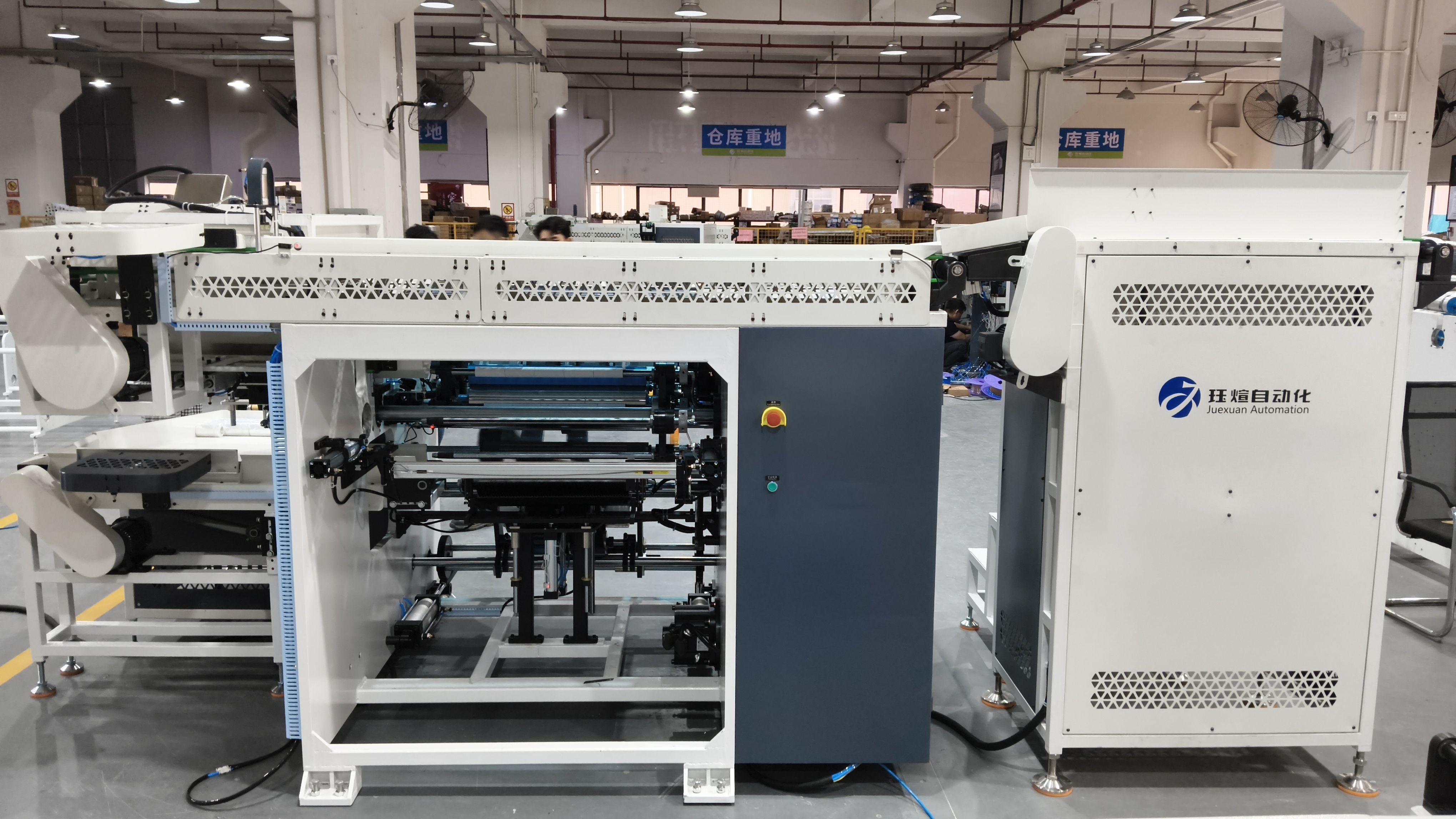
The most immediate impact of a fully automatic stretch film rewinder is raw throughput. Manual and semi-automatic processes are limited by human reaction time and physical speed. Automated systems utilize servo drive systems to maintain consistent, high-speed operations.
For instance, top-tier machines can reach real process speeds of up to 600 to 800 meters per minute. This capability allows for a daily output that can exceed 2,500 kilograms per machine. When you multiply this efficiency across a week or a month, the production volume skyrockets compared to traditional methods.
To visualize the difference, let’s look at how a fully automatic setup compares to manual or semi-automatic alternatives across key production metrics.
Feature | Manual / Semi-Auto Rewinder | Fully Automatic Stretch Film Rewinder |
|---|---|---|
Operator Involvement | High (loading cores, cutting) | Low (supervision only) |
Maximum Speed | 300 - 400 m/min | 600 - 800 m/min |
Shaft Changing | Manual / Semi-Auto | Automatic (4-shaft systems) |
Material Waste | Moderate (human error in cutting) | Low (precision automated cutting) |
Consistency | Variable tension and look | Uniform tension and appearance |
Daily Output | 800 - 1,200 kg | 2,000 - 2,500+ kg |
One of the most innovative ways to increase efficiency is by removing the paper core entirely. A fully automatic stretch film rewinding machine equipped for coreless production eliminates the cost of purchasing and storing cardboard tubes.
Coreless rolls are lighter, which translates to lower shipping costs, and they are more environmentally friendly, a selling point that is becoming increasingly important to end-users. Machines like the JX-500-4AR series from Juexuan Automation offer the flexibility to switch between cored and coreless rewinding. This versatility ensures you can meet diverse customer requests without needing separate production lines, further optimizing your floor space and capital investment.

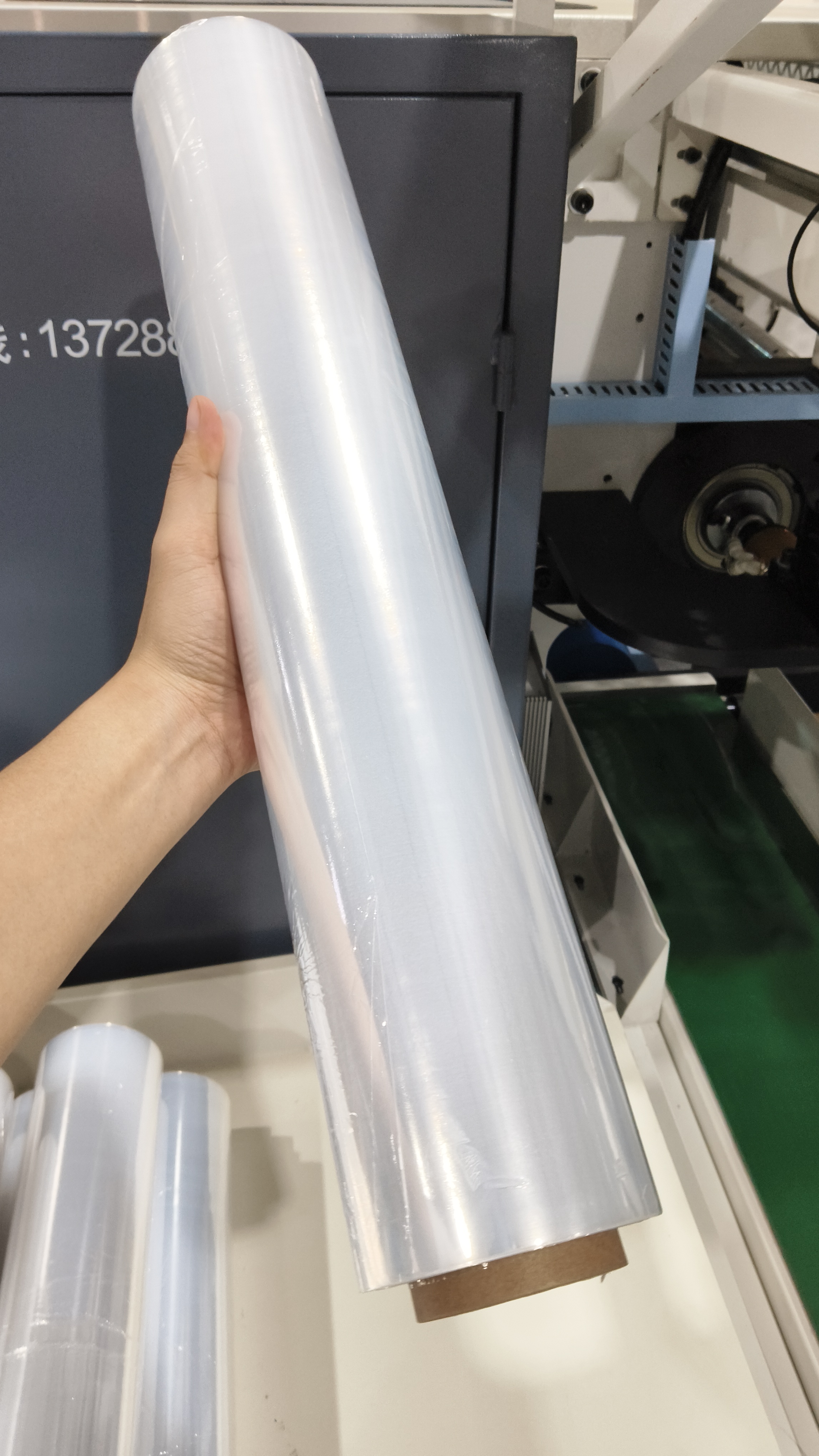
Speed is useless if the product quality suffers. A common issue with manual rewinding is inconsistent tension, which can lead to telescoping rolls or film that breaks during application.
A high-end film rewinding machine utilizes advanced tension control systems. whether handling 500mm or up to 2500mm widths, the machine ensures that every meter of film is wound with the exact same tension. This results in perfectly cylindrical rolls that look professional and perform reliably for the end customer. Furthermore, automated cutting ensures clean edges every time, eliminating the jagged cuts often associated with manual blades.
Yes. Because the machine handles the loading, winding, cutting, and unloading processes automatically, one operator can easily supervise 2 to 3 machines. Their primary task becomes replenishing the master rolls and ensuring the hopper for paper tubes (if used) is full.
Most modern fully automatic rewinding machines are versatile. They can process various stretch film materials including LLDPE (Linear Low-Density Polyethylene), CPP, CPE, PE, and POF. Always check the specific machine specs to ensure compatibility with your film type.
While these machines are more complex than manual winders, reputable manufacturers design them for durability. Features like servo motor drives reduce mechanical wear compared to older chain-drive systems. Additionally, most machines come with user-friendly interfaces for troubleshooting.
Investing in a fully automatic stretch film rewinder is not just a purchase; it is a strategic move to secure the future of your manufacturing operations. By drastically increasing speed, reducing reliance on manual labor, and enabling versatile production options like coreless winding, you position your business to handle larger orders with tighter deadlines.
If you are ready to stop letting production bottlenecks dictate your revenue, it is time to explore the advanced solutions available. Companies like Juexuan Automation offer a range of equipment tailored to different widths and speed requirements, helping you find the perfect match for your factory floor.


