
Views: 0 Author: Site Editor Publish Time: 2026-03-02 Origin: Site


Selecting the right stretch film coreless slitter can transform your packaging operation. With the right equipment, you'll reduce material waste, improve efficiency, and lower costs. But with so many options available, how do you identify the best coreless slitter for your specific requirements?
This guide walks you through the key factors to consider when choosing a stretch film coreless slitter, helping you make an informed decision that aligns with your production goals.
Coreless slitters eliminate the need for cardboard cores traditionally used in film winding. This technology winds stretch film directly into rolls without a central core, reducing material costs and environmental impact. Before diving into selection criteria, it's helpful to understand how this technology differs from conventional core-based systems.
The primary advantage lies in material savings. Traditional cores add weight and cost to every roll. Coreless technology removes this expense while creating more compact rolls that save storage and shipping space.
Your daily output requirements should guide your equipment selection. High-speed coreless slitters can process film at rates exceeding 600 meters per minute, making them suitable for large-scale operations. If your facility produces 2,500 kilograms or more of stretch film daily, look for machines designed to handle these volumes efficiently.
Lower-volume operations may benefit from semi-automatic or entry-level automatic systems that balance capability with investment costs. Assess your current production needs and factor in anticipated growth over the next three to five years.
Different coreless slitters accommodate varying film widths and materials. Most manufacturers offer machines with processing widths ranging from 500mm to 2,500mm. Consider the film types you work with—LLDPE, CPP, CPE, PE, or POF—and verify that your chosen equipment handles these materials effectively.
Pay attention to the standard roll sizes your customers require. Many coreless slitters produce 50mm and 76mm sub-rolls, but confirm these specifications match your market demands.
Coreless slitters come in several automation configurations:
Fully automatic systems handle loading, cutting, and unloading with minimal operator intervention. These machines maximize efficiency but require higher initial investment.
Semi-automatic models offer a middle ground, automating critical functions while requiring some manual operation. They work well for mid-sized operations seeking to improve efficiency without full automation costs.
Traditional manual systems provide basic functionality at lower price points, suitable for smaller operations or businesses just transitioning to coreless technology.
Reliable equipment delivers consistent roll quality. Look for machines equipped with servo drive systems, which provide superior tension control and more precise winding. This results in uniform rolls with better edge quality and fewer defects.
Advanced models include automatic film cutting and four-shaft changing systems that minimize downtime during roll changeovers. These features contribute to higher overall equipment effectiveness (OEE).
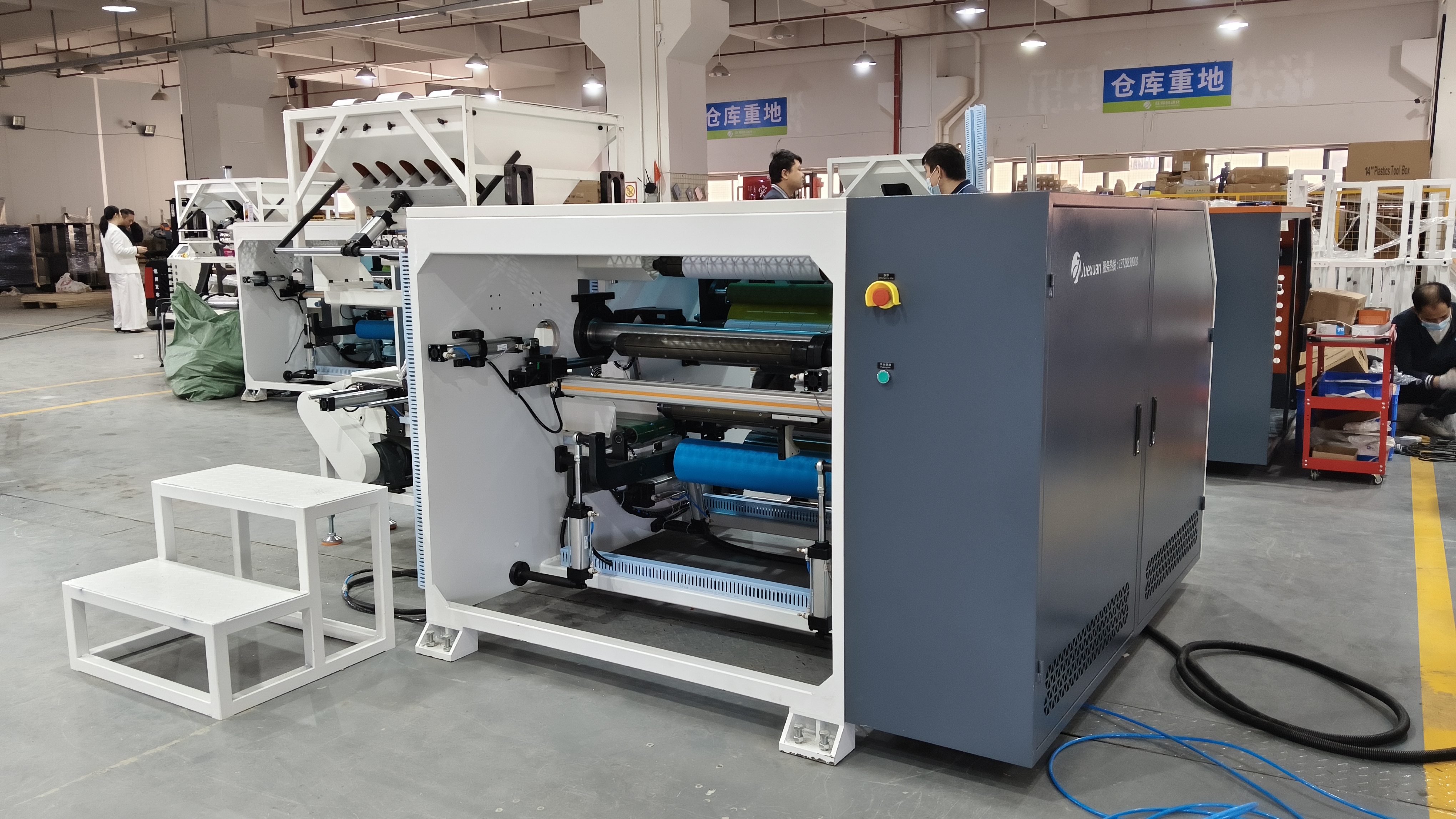
Manufacturers often cite maximum speeds, but real process speed—the sustained operating rate during production—matters more. A coreless slitter with a real process speed of 600-800 meters per minute indicates robust performance under actual working conditions.
For operations that produce both cored and coreless rolls, select equipment that handles both formats. Some advanced coreless slitters feature automatic paper tube loading, providing flexibility for diverse customer requirements.
Modern coreless slitters incorporate programmable logic controllers (PLCs) with user-friendly interfaces. Look for intuitive control panels that your operators can master quickly, reducing training time and minimizing errors.
Partner with established manufacturers who specialize in stretch film rewinding and slitting equipment. Companies with extensive industry experience typically offer more refined technology and better understand common production challenges.
Research customer testimonials and case studies. Manufacturers serving clients across multiple industries and regions demonstrate proven reliability.
Post-purchase support significantly impacts long-term equipment performance. Verify that your chosen manufacturer provides:
Comprehensive installation and training
Readily available spare parts
Remote technical support
On-site service options when needed
1
Quality certifications like CE and TUV indicate adherence to international safety and performance standards. These certifications provide assurance that equipment meets rigorous quality benchmarks.
While purchase price matters, evaluate total cost of ownership. Factor in:
Operating costs, including energy consumption and maintenance
Material savings from eliminating cores
Labor efficiency gains from automation
Shipping cost reductions due to more compact rolls
Higher-quality equipment often delivers better ROI through reduced downtime, lower maintenance costs, and superior product quality.
Start by clearly defining your requirements. Document your current production volumes, film specifications, quality standards, and budget parameters. Request detailed quotes from multiple manufacturers, ensuring proposals include:
Complete technical specifications
Training and installation services
Warranty terms
Expected delivery timelines
Visit manufacturing facilities when possible to see equipment in operation. This provides valuable insight into build quality and operational characteristics that specifications alone don't convey.
Choosing the right stretch film coreless slitter requires balancing multiple factors—production requirements, technical capabilities, manufacturer reputation, and budget constraints. By systematically evaluating these elements, you'll identify equipment that meets your current needs while accommodating future growth.
Ready to explore coreless slitting solutions for your operation? Juexuan Automation specializes in stretch film rewinding and slitting equipment, offering machines designed for various production scales and requirements. Contact their team to discuss your specific needs and receive a customized equipment recommendation.


