
Views: 0 Author: Site Editor Publish Time: 2026-03-09 Origin: Site


The flexible packaging industry is at a turning point. As manufacturers face mounting pressure to cut costs, reduce waste, and keep up with accelerating production demands, one technology is quietly reshaping how stretch film is processed: coreless slitting.
The shift away from core-dependent systems isn't just a trend—it reflects a broader rethinking of how film converting operations should work. Coreless stretch film slitters eliminate the cardboard or plastic tube at the center of each roll, reducing material costs, simplifying logistics, and opening the door to faster, more automated production lines. For manufacturers still running traditional setups, understanding where this technology is headed could be the difference between staying competitive and falling behind.
This post explores the key trends shaping the next generation of stretch film coreless slitters and stretch film slitting machines—and what they mean for your operation.
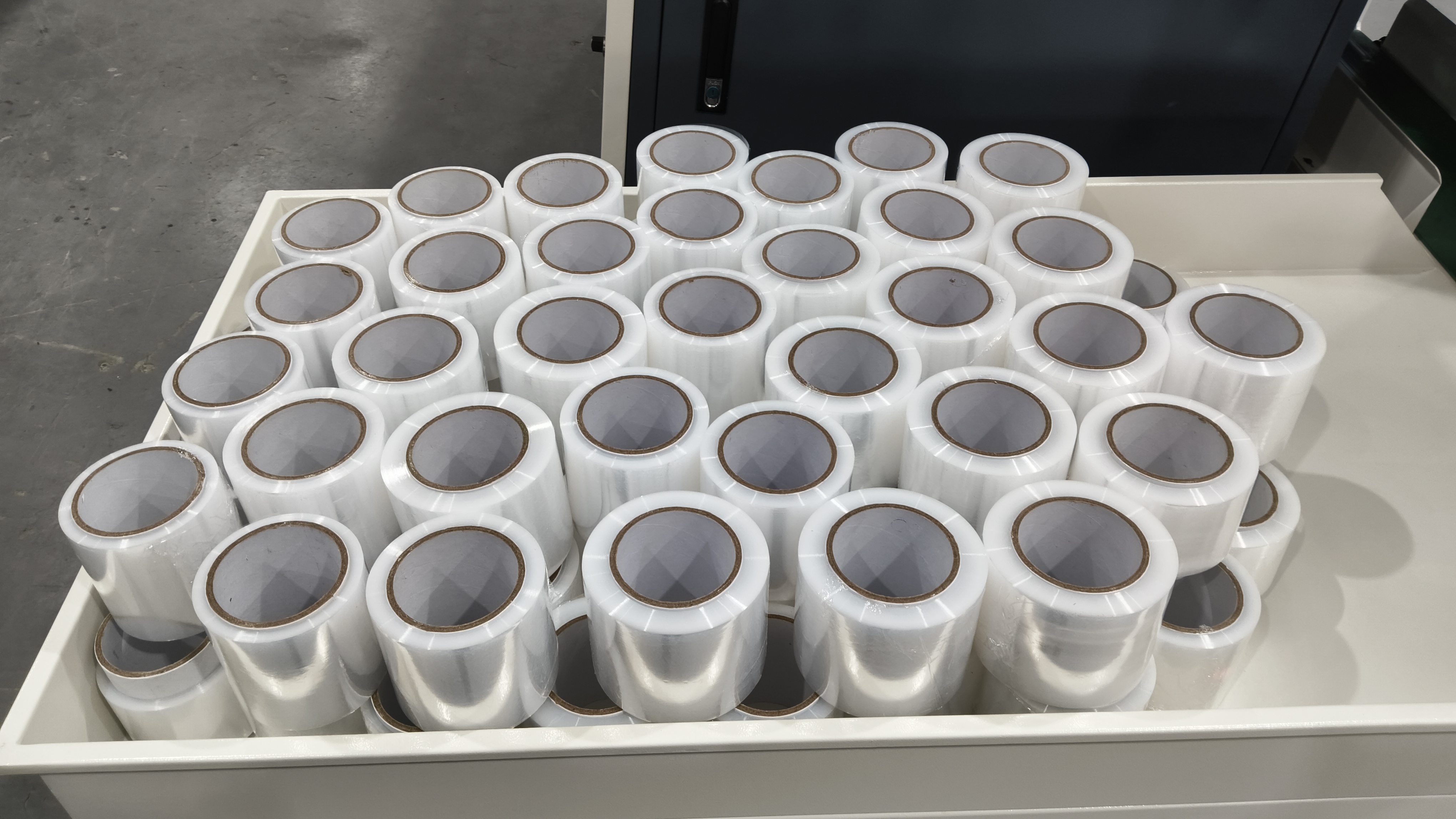
Traditional stretch film production relies on cardboard or plastic cores to hold each roll together. These cores add cost, create disposal challenges, and require additional handling at every stage of the process. Coreless technology removes that dependency entirely.
A fully automatic stretch film slitter rewinder can produce tight, stable rolls without any inner tube—using precision tension control and winding geometry to hold the roll's shape. The result is less material waste, lower per-unit costs, and rolls that are easier to handle and ship.
The transition is already well underway. Manufacturers across Europe, North America, and Asia are replacing legacy equipment with coreless systems that offer both cored and coreless output modes—giving operations the flexibility to meet different customer specifications from a single machine.
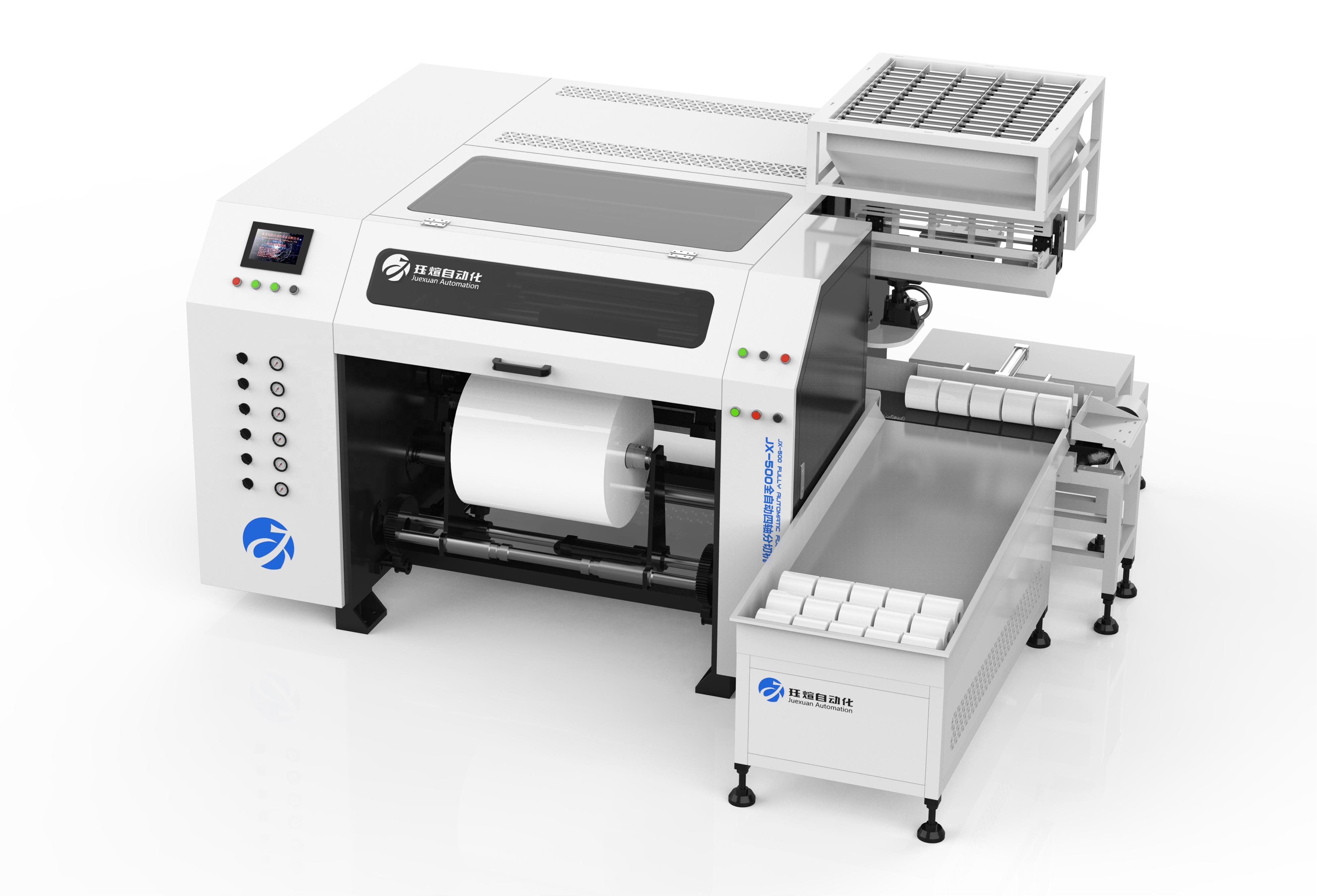
Early coreless slitters still required manual intervention at key points—loading film, transferring rolls, adjusting tension. The next generation of stretch film slitting machines is removing those manual steps entirely.
Machines like Juexuan Automation's JX-500-4AS series now feature automatic shaft changing, automatic film loading and cutting, and automatic tube loading and unloading. Real process speeds reach up to 600 meters per minute. That level of automation reduces reliance on skilled labor, cuts cycle times, and makes it far easier to scale output without proportionally increasing headcount.
Going forward, expect automation to extend further into quality control—with integrated sensors detecting film defects, roll weight deviations, and tension inconsistencies in real time.
Speed has always been a limiting factor in film converting. Push a machine too fast, and roll quality suffers. The engineering challenge for next-generation stretch film slitting machines is maintaining tight tolerances at higher throughputs.
Current high-performance machines already achieve rewinding speeds of 800 meters per minute, with daily outputs reaching 2,500 kilograms or more. Servo drive systems are central to this progress—they offer more precise control over tension and winding force than traditional hydraulic or mechanical systems, allowing faster speeds with consistent roll quality.
The trend toward servo-driven, high-speed coreless systems will continue as manufacturers look to process more film in fewer shifts.
Flexible packaging materials are diversifying. Beyond standard LLDPE stretch film, manufacturers increasingly need to process CPP, CPE, PE, POF, and co-extruded films with different thickness profiles and stretch characteristics.
Future stretch film coreless slitters will need to handle this variety without extensive retooling. The ability to process widths from 500mm to 2500mm across multiple material types—while maintaining coreless winding precision—will become a baseline expectation rather than a premium feature.
This has direct implications for equipment selection. Operations that source materials from multiple suppliers or serve diverse end markets need machines with broad material compatibility built in.
The integration of smart controls into stretch film slitting machines is accelerating. Touchscreen interfaces, programmable recipe storage, and real-time production data are already standard on modern fully automatic stretch film slitter rewinders. What's coming next is deeper connectivity.
Remote diagnostics allow manufacturers and equipment suppliers to monitor machine performance, identify wear patterns, and push software updates without an on-site visit. For global operations with plants across multiple regions, this capability reduces downtime and cuts maintenance costs significantly.
Juexuan Automation, for example, already provides online support for repairs and troubleshooting—a capability that becomes far more powerful when paired with connected machine data.
Coreless technology already delivers environmental benefits by eliminating core waste. But future designs will go further. Expect to see stretch film slitting machines engineered with energy efficiency as a core specification—not an afterthought.
This includes regenerative braking systems that recover energy during deceleration, optimized drive configurations that reduce idle power consumption, and designs that minimize film trim waste during the slitting process. As packaging manufacturers face increasing regulatory and customer pressure around sustainability, equipment that contributes to measurable waste and energy reductions will carry real commercial value.
Feature | Traditional Core-Based Slitter | Fully Automatic Coreless Slitter |
|---|---|---|
Core material cost | High (ongoing) | Eliminated |
Labor requirement | High | Low |
Processing speed | Moderate | Up to 800 m/min |
Roll format flexibility | Core only | Cored and coreless |
Waste reduction | Limited | Significant |
Automation level | Semi-automatic | Fully automatic |
Remote diagnostics | Rarely available | Increasingly standard |
What is a stretch film coreless slitter?
A stretch film coreless slitter is a machine that slits and rewinds stretch film into finished rolls without using a cardboard or plastic inner core. The rolls maintain their shape through precision tension control during the winding process.
What materials can a coreless stretch film slitting machine process?
Most modern machines are designed to handle a range of flexible film materials, including LLDPE, CPP, CPE, PE, and POF. Processing width and film thickness compatibility varies by model, so it's worth confirming specifications against your production requirements before purchasing.
How fast is a fully automatic stretch film slitter rewinder?
Current high-performance models achieve real process speeds between 600 and 800 meters per minute, depending on the machine configuration and film type. Daily output can reach 2,500 kilograms or more on advanced systems.
Is coreless slitting suitable for all stretch film applications?
Coreless rolls work well for most industrial stretch film applications, particularly hand wrap and machine wrap products. Some specialty applications may still require cored rolls—many modern machines support both formats, giving manufacturers the flexibility to serve different market segments.
What should I consider when choosing a coreless slitter for my operation?
Key factors include processing speed, material compatibility, roll format flexibility (cored vs. coreless), automation level, after-sales support, and total cost of ownership. Reviewing technical specifications against your actual production volumes and film types is the most reliable way to narrow down your options.
The direction of travel is clear. Coreless slitting technology is moving toward higher speeds, greater automation, broader material compatibility, and smarter connectivity—all while delivering sustainability benefits that traditional systems can't match.
For manufacturers still evaluating whether to make the switch, the question isn't whether coreless technology will become the industry standard. It's how quickly that transition will happen, and whether your operation is positioned to benefit from it early.
Juexuan Automation designs and manufactures a full range of fully automatic stretch film slitter rewinders and coreless rewinding machines, exported to more than 80 countries and backed by over 5,000 customer cases worldwide. To find the right configuration for your production line, contact the Juexuan team directly or explore their full product range at jxfilmmachine.com.


